Author: Darko Aleksovski
John Berger says that seeing comes before speaking and that we recognize the world by looking even before we begin to talk. In this sense, the formal elements of which the works of Dushan Stefanovski are composed come before the words and the interpretation, i.e., before what we can say about them. On the one hand, Stefanovski’s works in their entirety act as abstract representations and notions, while they are highly figurative in certain parts. A closer look at them reveals textures from our everyday life: a torn corner of a piece of paper with a QR code, a bit of concrete with a patina, broken windows in wooden frames with crumbling paint, a failed tag on the back seats of a bus, scratched mailboxes at the entrance in a building and faded stickers on them.
The book I would rather die than be uncomfortable is a selection of works from Dushan Stefanovski’s current drawing activity as part of his artistic practice, which involves clippings, fragments, details, signs, and symbols with cultural and iconographic references. Although his formal art education is in the field of printmaking, his beginnings as a visual artist are in graffiti art. The short biography with which the book begins mentions that he continues to use the methods of drawing with rollers and brushes, spraying, and multi-layer processing in his artistic practice. Hence the specificity of reading his series of works on which he works continuously.
Stefanovski’s book, in a complex narrative, comprises forty-nine depictions of a skull as the primary or secondary motive.
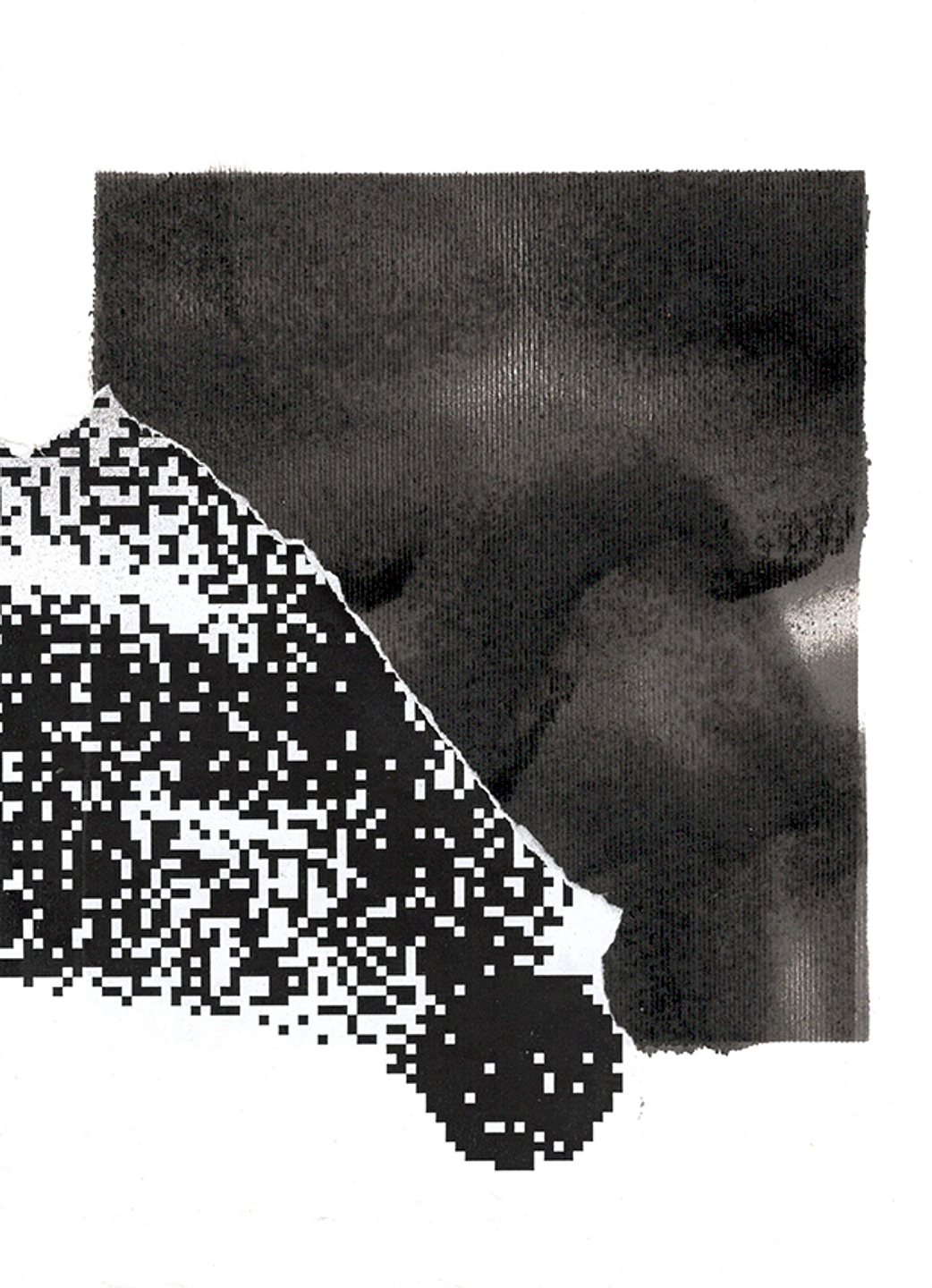
Dushan Stefanovski, Contemplative drawing of a skull, Twenty-six, "I would rather die than be uncomfortable", published by PrivatePrint, 2022
Building on references from art history, graffiti heritage, and anachronistic readings of a symbol as a specific signifier, Stefanovski uses the skull as a display to generate a particular visual structure. I would rather die than be uncomfortable, which Stefanovski realizes as a place to present this series of works with skulls is not meant to be a catalog. In Stefanovski’s case, it is a new medium and visual research - an attempt to move his works from the ephemeral character of graffiti art into a form close to a personal collection of drawings. In that sense, to move graffiti practice into the form of an artist’s book is a bold and, at the same time, subversive act. The reverse position of taking a practice that is so specific to urban spaces and placing it in print is a way to nullify the ephemerality of these works in the long run. Furthermore, the historical baggage of graffiti art is closely connected to the decentralization of art and - even more so - with the democratization of art media and spaces; in the case of I would rather die than be uncomfortable, can also be read as an attempt to document this critique of the art system, or continue the work in a medium that practically cannot be separated from the institutional practices of archiving - the book.
Stefanovski’s artist’s book, in a methodological sense, builds on the recontextualization inherited from modern and contemporary art. The skull as a form, sign, and symbol is found, in Neolithic and prehistoric artifacts, through the ancient period and especially in the Middle Ages, until the time of the Enlightenment, modern and contemporary art. The skull itself has many meanings of magical, religious, rationalist, metaphysical, and existential character. Still, in Stefanovski’s work, it is read as an archetype of the modern collective state of unpleasantness and discomfort, making this artist’s book a relevant reflection of the social reality in which we live.